
Insights
When to Prune Your Trees in New Zealand: A Season by Season Guide
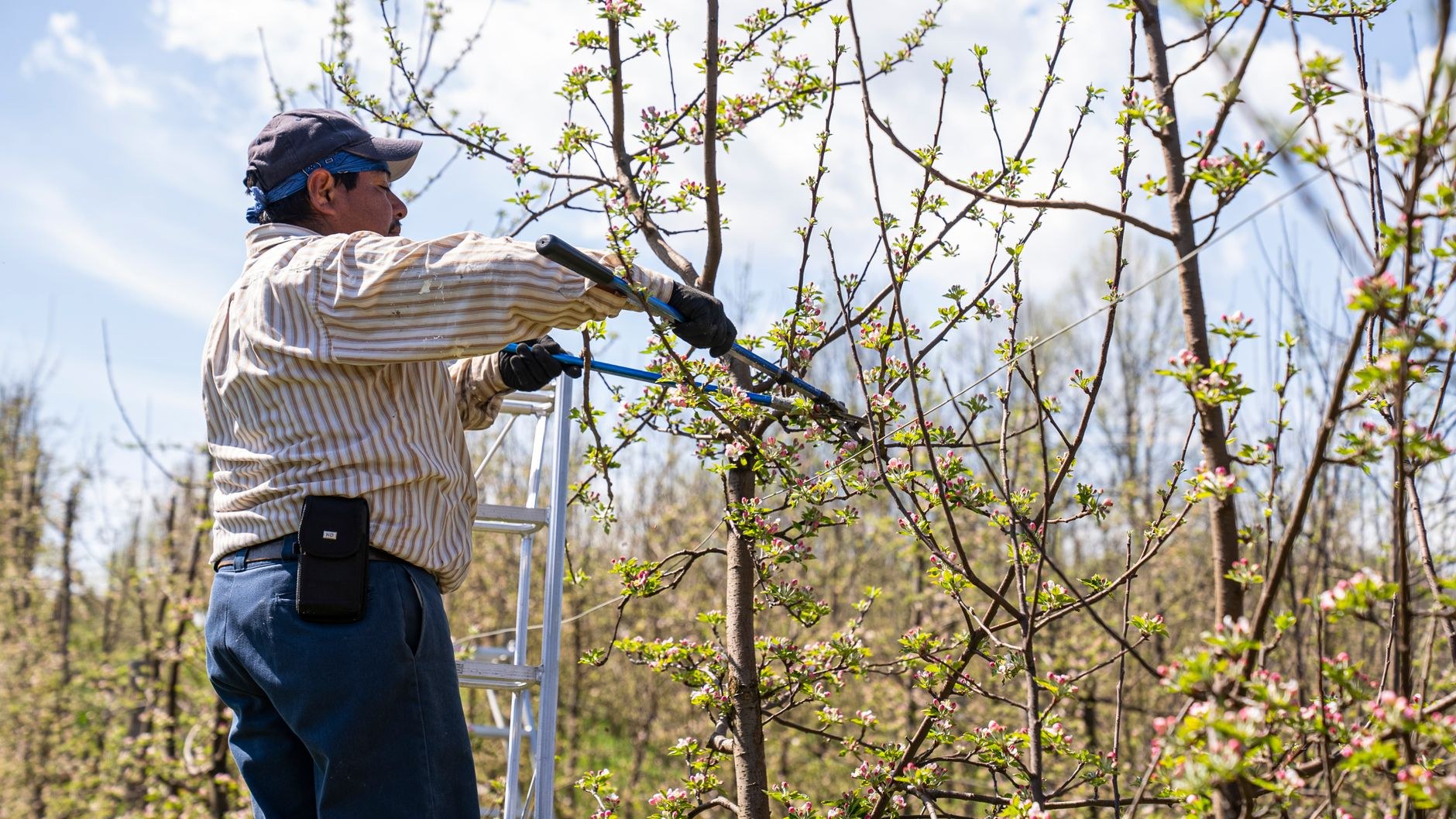
Timing matters more than most people think when it comes to pruning. Cut at the wrong time and you can invite disease, lose next season's flowers, or stress the tree right when it's trying to recover. Here's how we think about the seasons.
Late winter to early spring is the main pruning window for most deciduous trees. The leaves are off, so you can see the branch structure clearly and make clean decisions about what to take out. The tree is dormant, which means less sap loss and a faster heal once growth kicks off. This is the time for shaping, crown thinning, and removing crossing or rubbing branches.
Stone fruit like plums, cherries, apricots, and peaches are the exception. These are prone to silverleaf, a fungal disease that gets in through fresh cuts in cool, wet conditions. Prune these in summer after harvest when the weather is dry and the wounds seal quickly. The same dry-weather rule helps with bacterial problems in general.
Spring is the season to be careful. As sap rises, heavy cuts bleed more and the tree is putting energy into new growth. Light tidying is fine, but save the big structural work for dormancy. If your tree flowers in spring, pruning beforehand means cutting off the buds, so wait until straight after flowering if blooms matter to you.
Summer pruning is useful for slowing growth and managing size, which is handy for fruit trees you want to keep compact and within reach. It's also the right time to take out water shoots and to thin the canopy so light and air reach the fruit.
Autumn is generally the season to avoid for anything major. Wounds heal slowly heading into the cold, and it's prime time for fungal spores. Stick to removing obviously dead, diseased, or damaged wood, which can be done safely any time of year.
A few rules hold all year round. Always remove the three Ds first: dead, diseased, and damaged wood. Make clean cuts just outside the branch collar rather than flush to the trunk, because the collar is where the tree seals the wound. Never take more than about a quarter of the canopy in one go, as removing too much at once shocks the tree and triggers a flush of weak regrowth.
If you're unsure what species you've got or how hard to cut, it's worth getting a qualified arborist to look before you start. A bad prune can take years to grow out, and some cuts can't be undone. We're always happy to walk your section and give you a plan for the year.