
Insights
How to Tell if a Tree on Your Property Is Dangerous
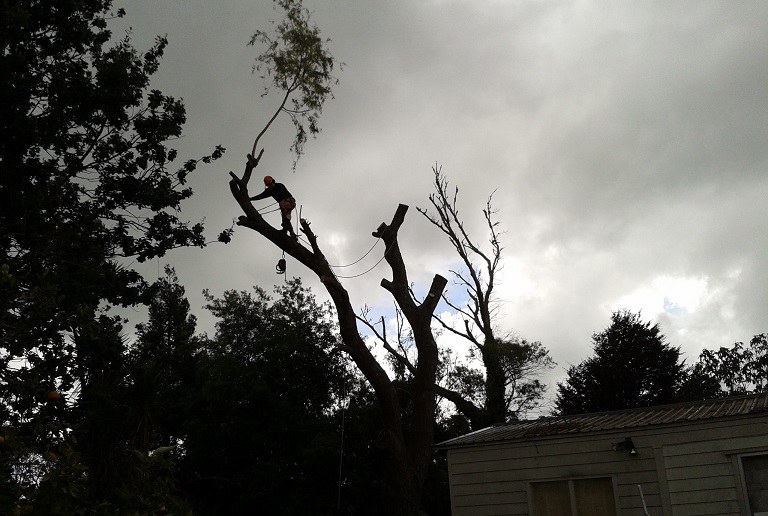
Most trees are perfectly safe and will outlive all of us. But some develop problems that turn them into a real risk to your house, your car, and the people on your section. Knowing what to look for means you can act before a branch comes down in the next southerly.
Start at the base. Look at the root plate, the area of ground where the trunk meets the soil. If you can see the soil lifting or cracking on one side, or the tree has started to lean recently, the roots may be failing. A tree that has always leaned is usually fine, but a new lean after wind or heavy rain is a warning sign worth taking seriously.
Moving up the trunk, check for cracks, splits, and cavities. A deep vertical crack can mean the trunk is failing, and a hollow or soft, crumbly area points to internal decay. Fungal growth like brackets or mushrooms on the trunk or around the base often means rot has set in, which weakens the wood from the inside even when the tree still looks leafy and healthy up top.
In the canopy, look for deadwood. Bare branches with no leaves in the growing season are dead and will eventually drop, and large deadwood over a driveway or play area is a clear hazard. Watch for branches with a tight V-shaped join, called included bark, because these unions are weak and prone to tearing out in wind. Anything hanging or snapped but caught up in the canopy needs to come down sooner rather than later.
Pay attention to the species and the setting too. Fast-growing trees like gums and wattles can shed limbs without much warning, especially in summer. Trees right beside the house, over the roof, or near power lines raise the stakes because there's no room for error if something fails.
There are a few things you can do yourself. Keep an eye out after every big storm, clear obvious deadwood you can safely reach, and don't pile soil or build up against the trunk, as that can rot the base. But climbing into a tree with a chainsaw is not a DIY job. Most serious injuries in this trade happen to people working at height without the right gear and training.
If you spot any of these signs, get a qualified arborist to assess the tree properly. We can often tell from the ground whether a tree is sound, needs remedial pruning, or genuinely has to come out. The earlier you catch a problem, the more options you have and the cheaper it usually is to deal with.